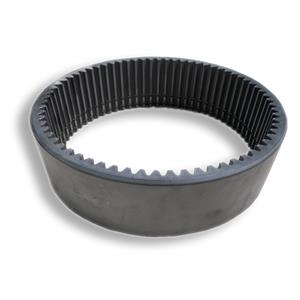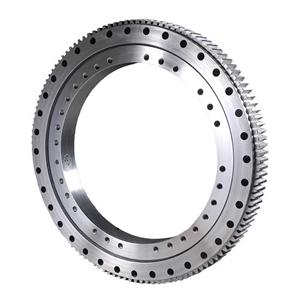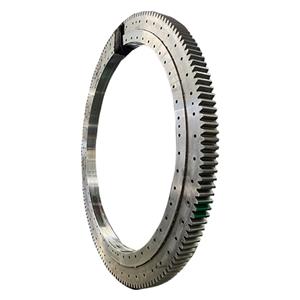
What is a slewing bearing?
As a child, I often wondered: How does a Ferris wheel turn? How can an excavator rotate a full 360 degrees? Why are so many machines capable of rotating so smoothly? Of course, all these questions can be answered quite simply: it is primarily thanks to the internal slewing bearings within these machines. When you think of a "bearing," the image that likely springs to mind is that small, rapidly spinning wheel found deep inside a machine. However, slewing bearings (also known as turntable bearings or slewing rings) are the "heavyweight giants" of the bearing world.
Unlike their smaller counterparts, these bearings are specifically engineered to support immense loads while simultaneously facilitating smooth, low-speed rotational movement.
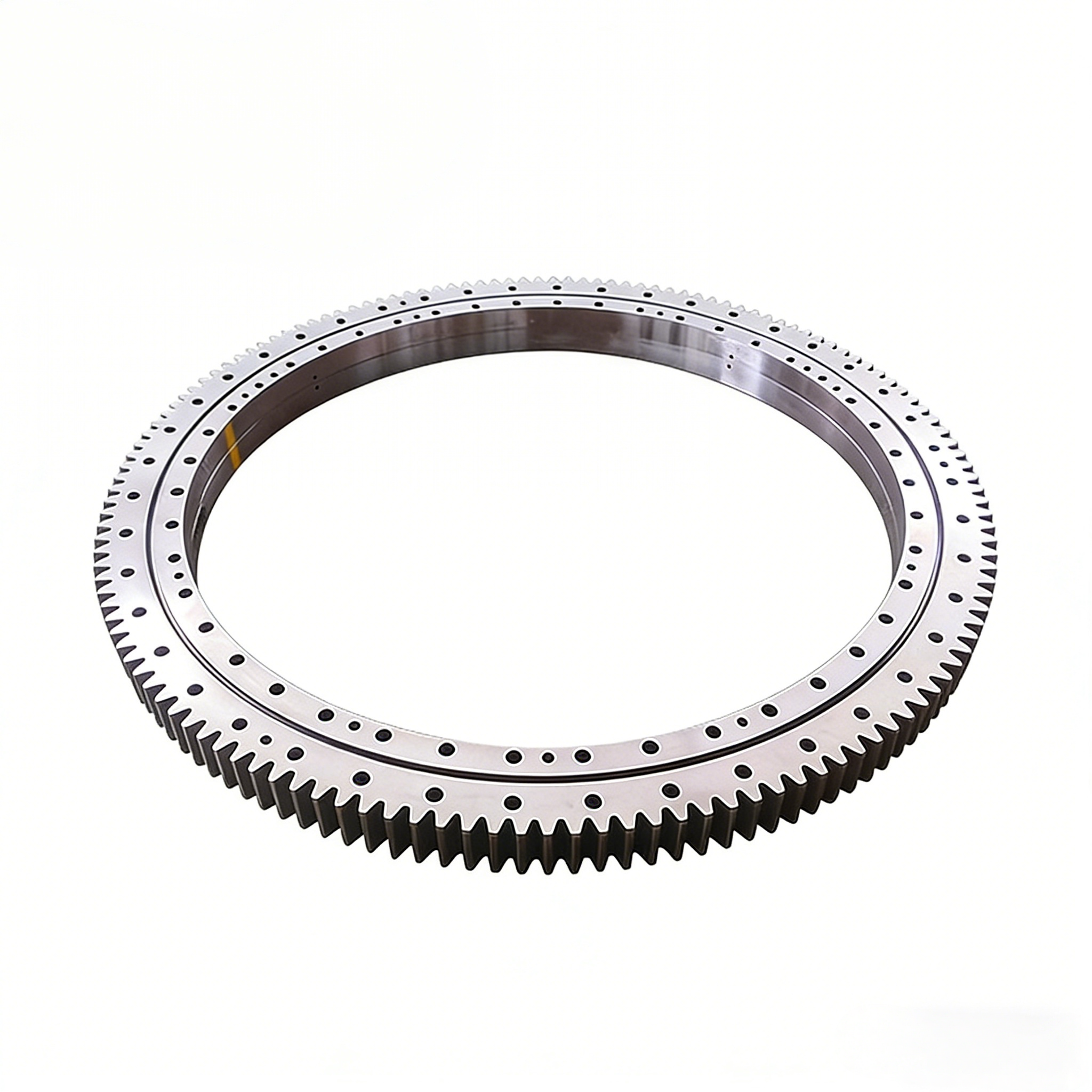
Whether in massive construction cranes or rotating medical imaging tables, slewing bearings act as "invisible joints"—the critical components that make the precise movement of such equipment possible.
Components
At the core of a slewing bearing are four fundamental components that work in unison to ensure reliable performance: the inner ring, the outer ring, the rolling elements, and the cage (or spacers). The inner ring is typically attached to the moving parts of the equipment, while the outer ring is fixed to the stationary frame, thereby establishing the foundation for rotational movement. The rolling elements—typically steel balls or cylindrical rollers arranged within V-shaped, X-shaped, or circular raceways—serve to minimize friction between the inner and outer rings, enabling smooth rotation even under heavy loads.
Applications
You can find slewing bearings in virtually any piece of machinery that requires a heavy-duty platform to rotate a full 360 degrees:
Industry | Application |
Construction | Excavators, cranes, and aerial work platforms. |
Energy | Wind turbine yaw and blade pitch mechanisms. |
Medical | CT and MRI scanners that rotate around the patient. |
Industrial | Robotic arms, bottling plants, and rotary tables. |
Maritime | Deck cranes and offshore mooring systems. |
Why Are They Important?
Without slewing bearings, modern infrastructure as we know it would be impossible. They enable machinery to support massive loads—forces strong enough to shatter ordinary bearings—while maintaining a compact physical footprint. By distributing weight across a broad surface area, they provide exceptional stability and precision—even when supporting loads weighing tens of tons—playing a pivotal role in our daily operations and helping to boost work efficiency.